

Find the legal career path that fits you
Explore career routes, earning potential, qualification paths and skills you need to succeed.
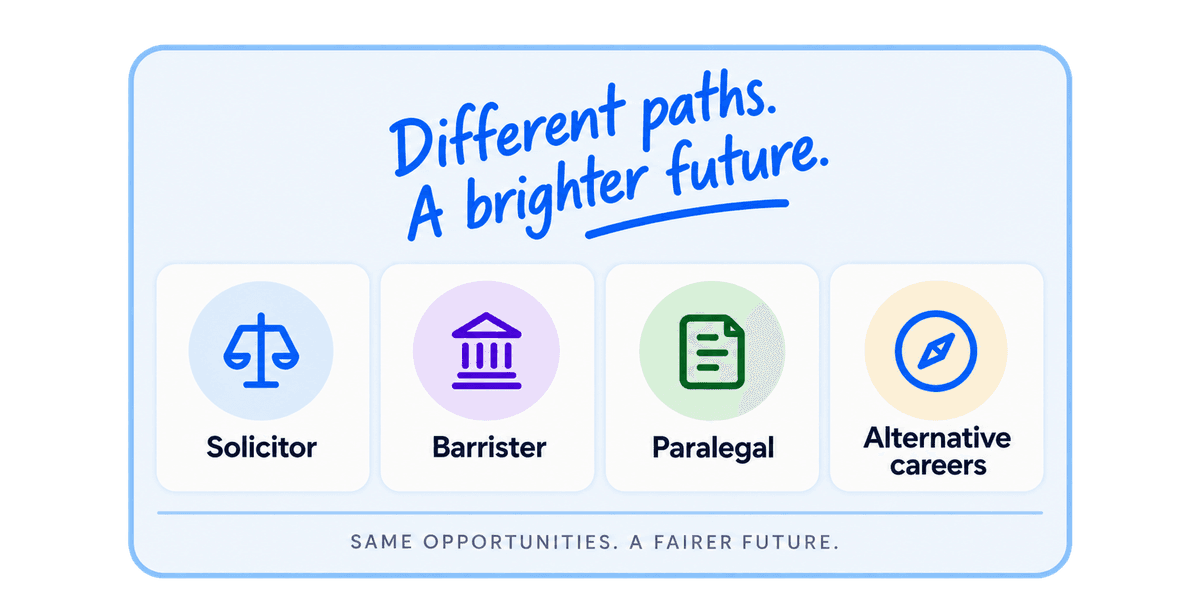
Choose your route
Compare different paths into law and find the right fit for you.
Understand the career
Learn more about the roles, qualification process and what a career in law involves.
Pay, prospects & alternatives
Explore earning potential, job prospects and other opportunities with a law degree.
Build your profile
Develop the skills and evidence you need to stand out.
Succeed in your studies
Get practical advice to make the most of your time at university.

SQE Funding, Scholarships and LLM vs Diploma Courses

How Much Will You Earn as a Solicitor? Complete Salary Guide 2026

How Long Does It Take to Become a Solicitor?

Solicitor Apprenticeship or University, Which Route?

How to Show Leadership Skills Early in Your Career

Alternative Career Paths for Law Graduates

How to Turn Retail Experience into Career-Ready Skills

Commercial Law Practice Areas Explained

The SQE Explained, How to Qualify as a Solicitor

How to Achieve a First-Class Degree in Law

How to Structure a First-Class Law Essay

Top 10 Skills Employers Look for In Graduates

Law CV Guidance for Early-Career Applications

How to Write a Strong Law Firm Cover Letter

Barrister vs Solicitor, What Is the Difference?

What is a Paralegal? A Complete Guide to the Role, the Work, and Whether It Is the Right Move for You

Law Degree vs Non-Law Degree for Commercial Law

GDL vs PGDL, What Is the Difference?

Is a law degree worth it financially? What the data actually says

The Highest-Paying Legal Graduate Jobs in 2026
Your questions, answered.
The routes into law, and how to work out which one fits you.
How do you become a solicitor in England and Wales?
Four stages: a degree in any subject, a conversion course if your degree was not in law, the two SQE assessments, and two years of qualifying work experience, which for most people is a training contract at a firm.
Read the complete guideWhat is the difference between a solicitor and a barrister?
Solicitors advise clients directly and run matters end to end, usually as employees of a firm. Barristers specialise in advocacy and are mostly self-employed in chambers, instructed by solicitors. The training routes are separate from the start.
Read the complete guideDo you need a law degree to become a solicitor?
No. Any degree subject is accepted, and commercial firms recruit heavily from non-law backgrounds. Non-law graduates take a conversion course before sitting the SQE.
How do you write a first-class law essay?
Answer the question that was asked, take a clear position, and spend most of your words on analysis rather than description. Marks come from weighing authority and counterargument, not from how much you can summarise.
Read the complete guideWhat skills do law firms actually look for?
Commercial awareness, clear written communication, attention to detail and the ability to work with other people under time pressure. Firms look for evidence of these from any part of your life, not only from legal work experience.